
LUX‑O (organic): Frequencies of an Alien Perspective
Experimental Audiovisual Film | Part I of the LUX Series | 2024
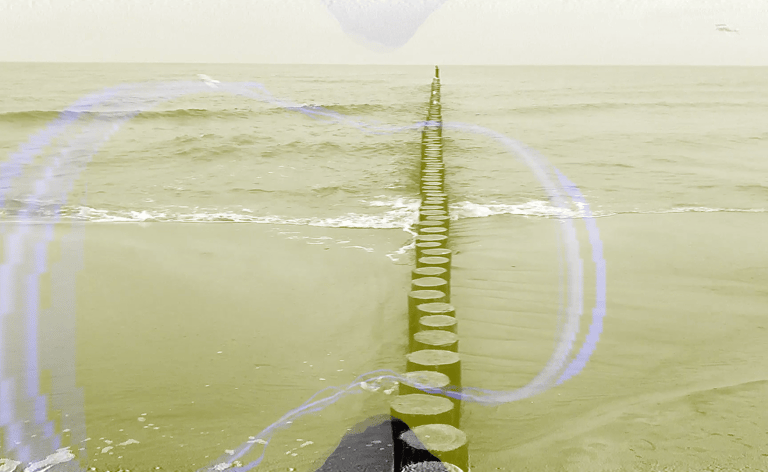
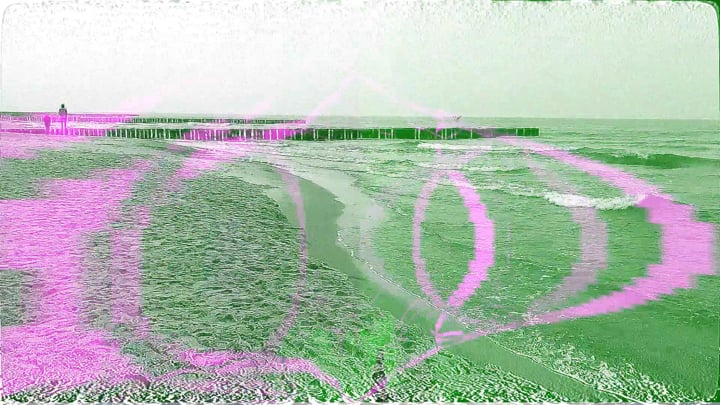
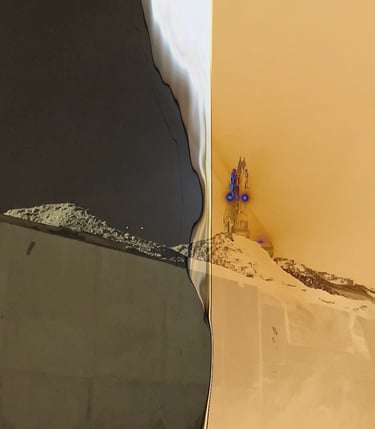
LUX-O (organic) is the first part of a three-chapter audiovisual series investigating perception across different spatial and material scales. The work combines black-and-white landscape footage from Croatia and Italy with pre-rendered 3D animation.
The film is constructed as a fixed audiovisual composition in which organic imagery and digital structures coexist within a shared visual field. Light, rhythm, and motion are shaped through sound-driven modulation, introducing temporal variation within a stable visual framework.
Instead of a fully generative system, the work operates through the relationship between composed image structures and parameter-based audiovisual transformation. Sound functions as a structural element that influences visual behaviour over time.
The sound layer incorporates recordings from NASA Mars missions, extending the work beyond an Earth-bound perspective. The film situates landscape, digital simulation, and planetary signal as interconnected perceptual fields.
LUX-O establishes the framework for the series, which continues with:
LUX-A (anorganic): constructed and technological environments
LUX-N (nano): microscopic and molecular scales
Year: 2024
Sound: science.nasa.gov
Medium: Self-recorded video footage; pre-rendered digital animation; sound-driven system
LUX-A (anorganic): Temporal System Deviations
Experimental Audiovisual Film | Part II of the LUX Series | 2026
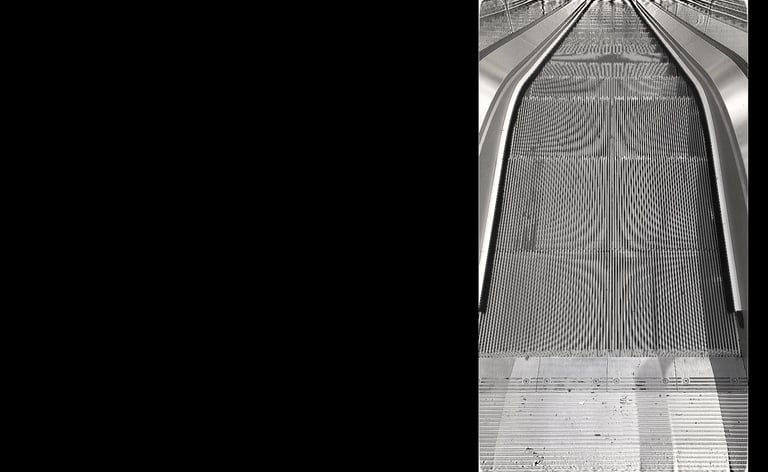
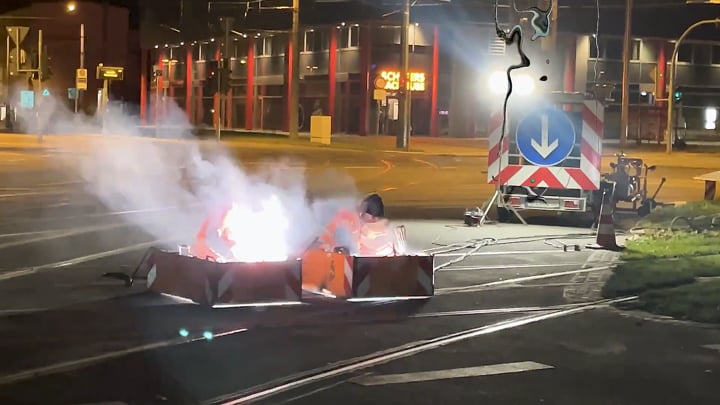
LUX-A (anorganic) is the second chapter of the LUX trilogy, investigating how perception is shaped through interaction with technological and constructed environments.
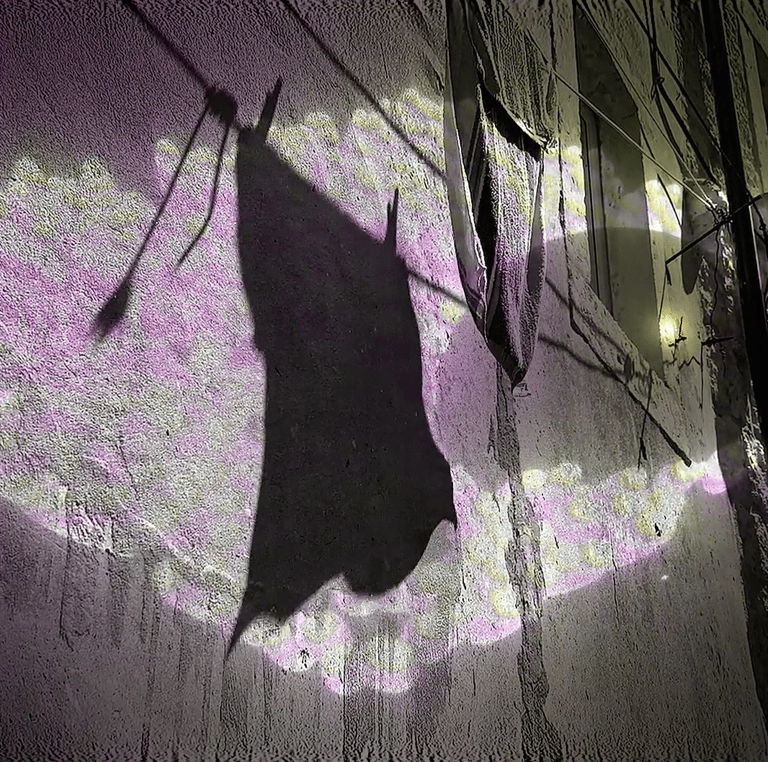
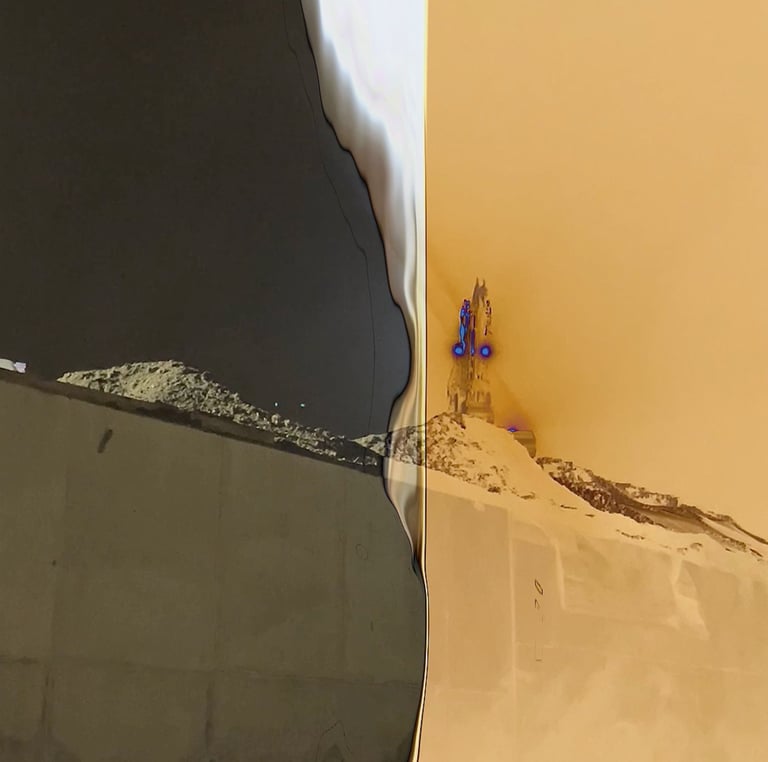
The film combines self-recorded urban and industrial footage with digitally generated visual structures within a continuously shifting audiovisual composition. Much of the recorded material focuses on people operating machinery, tracing gestures, repetitions, and behavioural rhythms that move ambiguously between work, play, control, and automation.
Structured as a fixed audiovisual work, the film explores how sound, movement, light, and repetition influence perceptual transformation over time. Visual modulation emerges through the interaction between image and sound, producing unstable relationships between human presence, machine behaviour, and audiovisual space.
Sound functions as a carrier of disruption within the system, introducing moments of misalignment between mechanical precision and human intervention. It marks deviations in timing and continuity, where error, labour, and variation become perceptible within an otherwise controlled structure.
The sound composition incorporates material from the BBC Sound Effects Library alongside processed electronic textures and signal-based sonic structures.
As the second part of the trilogy, LUX-A extends the series’ investigation into how interconnected systems shape perception across ecological, technological, and microscopic scales.
Year: 2026
Sound: bbc.co.uk – © 2026 BBC
Medium: Self-recorded video footage; generative visual systems; sound-responsive audiovisual composition
Investigates
Light as a perceptual and material phenomenon
Relationships between illumination, space, and perception
Optical transformation and sensory experience
Visible manifestations of invisible processes
Light, technology, and embodied experience