
Timeframe: 2019–ongoing
[freq:res] is a long-term research project exploring interaction as a communicative system between sound and visual structures within frequency-based and dynamic audiovisual environments.
The work investigates how acoustic parameters such as frequency, rhythm, amplitude, and vibration operate as relational forces within an interaction system that shapes spatial and temporal perception. Sound functions as an active structural component, influencing visual and spatial conditions through feedback and modulation.
Developed through modular systems and process-based processes, [freq:res] unfolds across installations, audiovisual environments, and collaborative contexts. Visual form emerges through evolving relations between sound, system constraints, and temporal processes, where meaning unfolds through interaction.
Timeframe: 2025–ongoing
opt:exp is a research framework exploring interaction as a communicative system across optical, material, and computational environments.
The framework investigates how light, sound, textiles, and embodied processes generate perceptual and spatial conditions through interaction, feedback, and temporal modulation. These elements operate as interconnected components within installation-based and wearable systems.
Within this framework, material and perceptual systems are developed as interrelated research lines, where meaning emerges through real-time interaction between embodied action, environmental conditions, and computational processes.
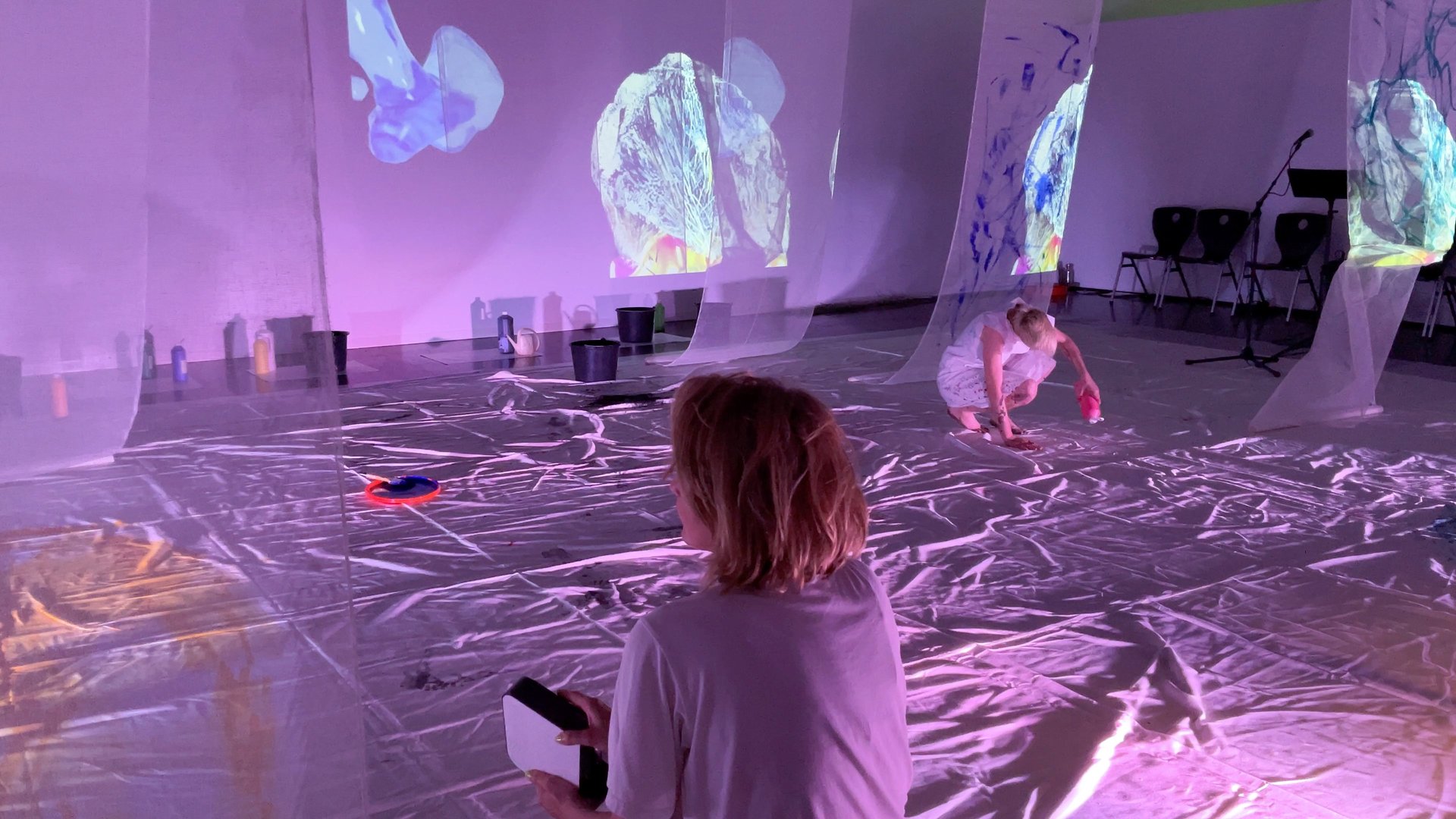
Live Systems explores audiovisual environments that operate through interaction between sound, image, embodied action, and system-based structures.
These configurations respond to live input and evolving conditions, producing continuously shifting relations between sonic, visual, spatial, and bodily elements. Interaction functions as the structuring principle through which presence, timing, and audiovisual transformation generate meaning within installation-based environments.
Within these systems, embodiment operates as an active component of interaction, where gesture, movement, and presence directly influence system behaviour and feedback processe
Interdisciplinary collaboration is an integral part of the practice. Projects are developed in dialogue with musicians, sound artists, scientists, technologists, and theorists.
In these contexts, collaborative contributions function as interacting components within shared communication systems. Sound, visual, and computational elements are co-constructed through immediate exchange, where meaning emerges through interaction as a relational process.